
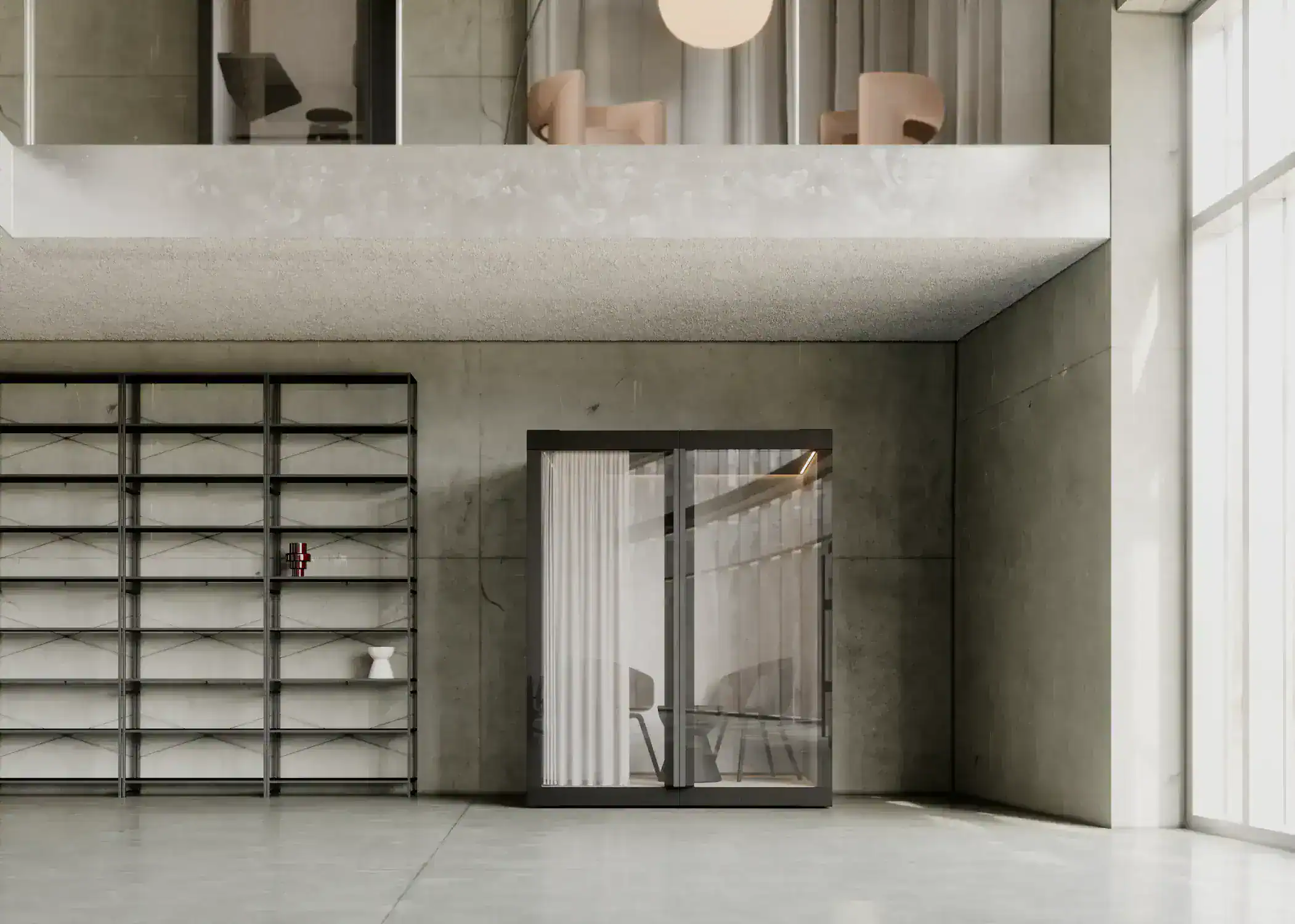
The answer to that question depends entirely on what you compare it against, however, what we have noticed is that most comparisons use the wrong baseline entirely.
Many businesses start with the wrong comparison. They price a silent pod against doing absolutely nothing. While in reality, the correct comparison would be a pod against a constructed meeting room, a lease extension, or the lost output from an open plan that introduces unwanted friction in your daily workflow.
Once you run those numbers the answer starts to become a bit more clear. For the sake of not sounding biased, here is some more data on this.
What does an office pod actually cost compared to a built meeting room?
A purpose-built meeting room in the EU costs between €15,000 and £50,000 once you include construction, HVAC, electrical work, acoustic treatment, and fit-out. That figure does not include the downtime your space will experience or extra load on personnel who have to supervise the build-out process. A purpose built meeting room will seat more people, which they are great for, however, experience shows, that larger meeting rooms still get taken up by teams of 2-3 people. At some point, it’s worth to evaluate if building out another meeting room will satiate the constant need for small, private workspaces.
A silent pod sits on the floor, assembles without trades, and moves when the space changes.
That last point is not incidental. For organisations on flexible leases — which describes most organisations signing today — the ability to relocate assets and infrastructure is of the highest importance. Often times, a build-out is not even possible due to the lease terms or internal business policies.
Acoustic office pods are one of the fastest ways to introduce private workspace without construction. They cost less than an average meeting room build-out and can be moved and removed on demand.
How much does office noise actually cost in lost productivity?
Background noise reduces productivity by up to 66%. And that figure comes from controlled research. The same evidence shows that removing ambient noise improves individual focus by up to 47%, and that acoustic interventions are linked to 20–30% improvements in focus and task accuracy. There is a reason why people enjoyed ”WFH” so much. One of the reasons is that home office offers an environment with significantly decreased amount of distractions.
The cost of distraction has a measurable shape. A ten-person team losing two hours each per week to noise and interrupted concentration represents more than 1,000 hours of productive time lost per year. At average knowledge worker rates, that loss substantially exceeds the capital cost of acoustic infrastructure within the first year.
66%
potential productivity loss from background noise
47%
focus improvement in quiet environments
93%
workers frustrated by call distractions at office
The 93% figure is from a Future Workplace study measuring call frustration specifically. The moment a client hears the office before they hear the conversation. In professional services, that impression carries weight and can lead to a measurably worse outcomes while on, for example, sales calls.
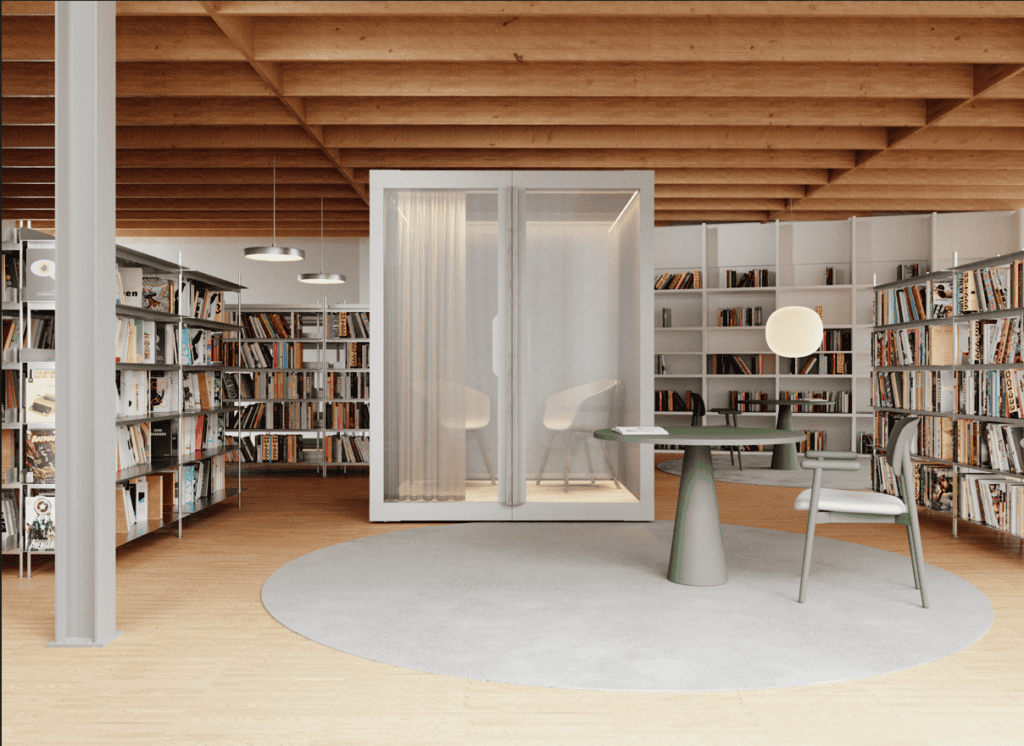
Does acoustic performance actually differ between pods?
Yes. While many silent pods boast impressive, or roughly similar dB ratings. The mechanism matters more than the headline number. Blocking noise reliably in such a small space is a complex task. You can’t trick physics. a silent pod that works has to have seals, gaskets, technical joints and fabric layers perfected, but even with all that, if the product has no mass, it will simply create voice distortions like reverb and poor performance will show.
ARKA Silent uses a five-layer noise absorption system built from materials selected for function. We use recycled wool and cotton layers for handling mid-frequency voice absorption. At the same time giving the interior a homely interior feeling. A natural 50mm wood pulp insulation layer addresses the lower-frequency register. Baltic birch plywood at 12mm and 15mm provides structural stiffness that eliminates the panel resonance common in thinner builds. The result is 33dB ISO-tested acoustic reduction which is independently verified.
The difference between a pod that appears acoustic and one that is acoustic becomes clear in use. This is especially true on video calls, where the microphone captures what your ear has learned to filter out.
Is a sustainable office pod a real procurement criterion or a nice-to-have?
It is becoming a real criterion faster than most procurement frameworks have adapted to.
Corporate real estate teams increasingly face ESG reporting requirements that extend to fit-out decisions. Acoustic pods specified on material transparency — FSC certification, formaldehyde-free construction, documented plastic weight — contribute to those reports in a way that standard commercial pods cannot.
Many acoustic pod manufacturers focus on the cost-effectiveness and ease of manufacture when picking their materials. at ARKA Silent we chose to approach it differently. A silent office booth is essentially a small room where teams will spend hours upon hours. It matters what they are built from. Not only because synthetic materials can off-gas harmful chemicals, but also because people favor honest and understandable materials that are reassuring to use. Our pods are crafted to be used. They are built to be comfortable and safe for prolonged work-sessions.
If you wish, you can learn more about our product range here SOLO data sheet and here DUO data sheet.
The real frame for this decision
The productivity loss from unmanaged open-plan noise is measurable and significant. Construction costs are fixed and non-recoverable. The cost of a lease extension to accommodate inadequate space compounds over time.
A pod is capital expenditure that addresses all three at once — acoustic performance, spatial flexibility, and air quality — without requiring trades, permits, or permanent commitment.
Whether that justifies the investment depends on your specific numbers. The question is almost never whether acoustic infrastructure pays for itself. It almost always does. The question is which infrastructure, and whether the materials inside it are ones you want people spending their working day inside.
Configure or request a quote here if you want to work through the numbers against your specific floorplan and headcount.